Chapter 16
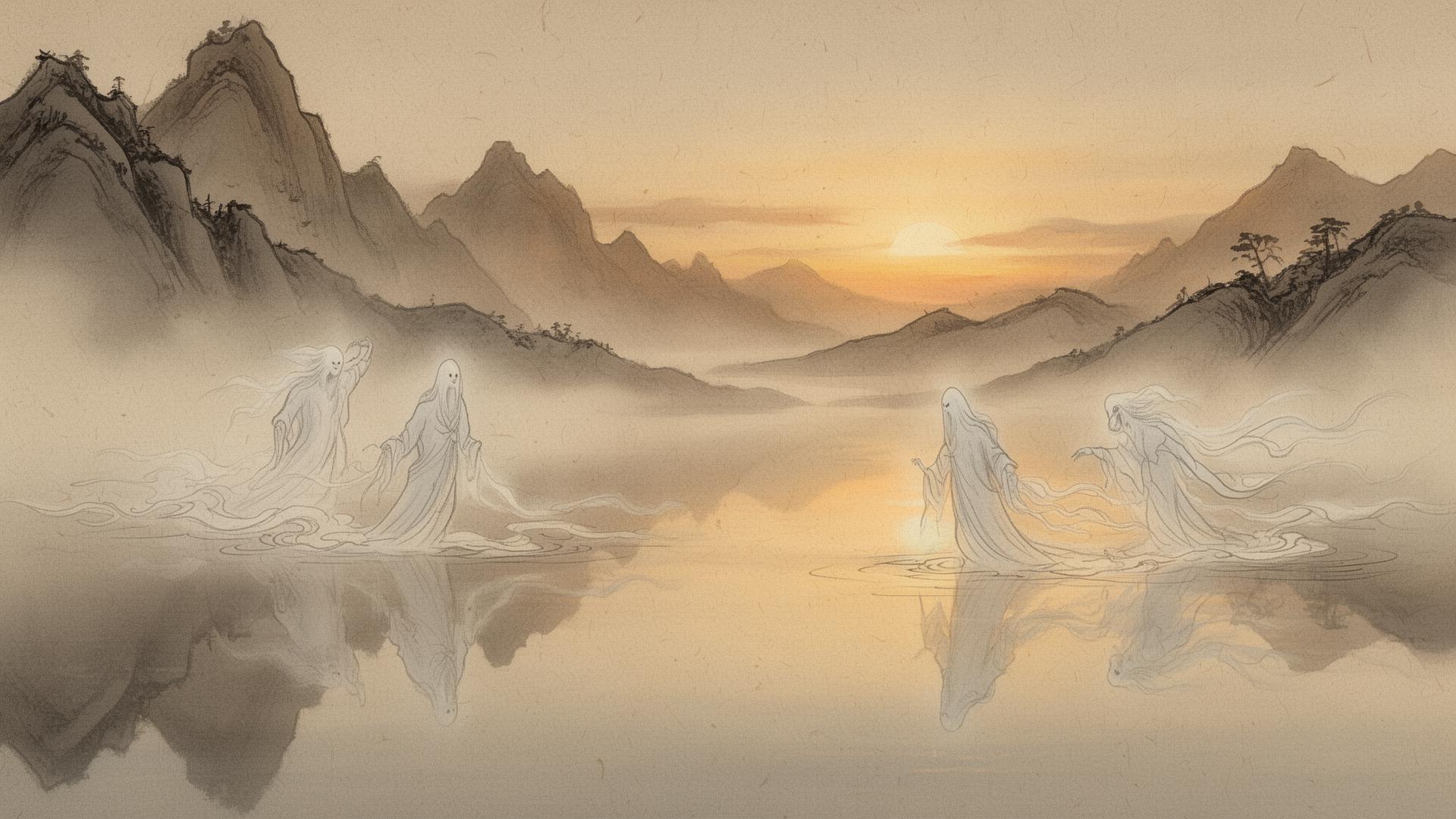
Dissolving Phantoms
Stop fighting what is not there.
Recognising the Shadow
The first move is to name what is happening. Pause mid-thought and ask plainly: 'Whom am I arguing with right now? Are they actually here?' Almost always the answer is no — they are miles away, or years away, or entirely invented. That single recognition breaks the spell. Naming it does not require solving it. It only requires seeing it for what it is.
Those who know do not speak; those who speak do not know.
Returning to the Body
The phantom lives in thought; the body lives in now. So the antidote is physical, not intellectual. Place a hand on the chest, lengthen the out-breath, feel the weight of your feet on the floor, notice three things you can actually see. As attention re-enters the room, the imagined opponent loses its grip — not because you defeated it, but because you stopped feeding it your presence.
Do not let things disturb the senses; do not let the senses disturb the heart.
Old Wounds
Old wounds return on their own schedule. The mistake is to treat each return as an invitation to re-fight the original battle — to draft the reply you never sent, to win the argument you lost. That only deepens the groove. The Zhuangzi 莊子 describes the heart as a mirror: it reflects what comes and lets it pass. A mirror does not store the image; it does not argue with it or push it away. Looked at calmly, an old wound loosens. Argued with, it hardens into identity.
Respond to things, but do not store them; thus you can prevail and not be harmed.
Imagined Judgement
A large share of social anxiety is fiction we have authored ourselves: what they must be thinking, how that silence must have been read, what the room decided about us. We then defend against this fiction as if it were evidence. The remedy is not reassurance — that only confirms the verdict mattered — but to notice the verdict was never delivered. No one else is thinking about you as much as you think they are. The Way of Heaven trims excess. Here, what is trimmed is the weight you gave to a thought no one else ever had.
Practical Steps
When you catch yourself mid-phantom, run this short sequence. It takes under a minute and works because each step pulls attention one notch closer to the actual.
Core Lesson
Most fights are with phantoms. Notice; return to the body; let go.
Practice for this lesson
A phantom is anyone you are fighting with who is not in the room — the colleague from yesterday, the parent from years ago, the conversation that has not happened. The body cannot tell the difference and pays the cost. This practice runs the three moves the lesson teaches: name, return, release.
“Respond to things, but do not store them; thus you can prevail and not be harmed.”
— Zhuangzi 莊子
- 1Sit comfortably. Take three slow breaths, longer on the out-breath. Let the room come back into focus.
- 2Notice what argument, replay, or rehearsal has been running in the background today. Don't analyse it — just locate it.
- 3Name it plainly, quietly, out loud if you can: 'I am arguing with ____ from ____.' Naming turns a mood into an object you can set down.
- 4Ask honestly: 'Are they actually in this room?' Let the no land. The opponent is imagined; the tightness in the body is real.
- 5Return to the body. Hand on chest. Feel the seat, the feet, the breath. Name three things you can actually see in front of you.
- 6Picture the heart as a clear mirror. The phantom passes across it; the mirror does not grab it, argue with it, or push it away. Let the image move on.
- 7Choose one small real action you will do in the next ten minutes — wash a cup, water a plant, send the one honest sentence. Action in the actual world outranks rehearsal in the imagined one.
- 8Open the eyes. The phantom will return; you now know the gesture. Each release is the practice — there is no final victory to win.
Reflection
- Which phantom did you find running in the background, and how long had it been there?
- What changed in the body the moment you named it and asked whether they were in the room?
- What is the one small real action that would honour the present instead of the replay?
You do not have to defeat the phantom. You only have to stop feeding it your presence. Name it, return to the body, let it pass — and do the one real thing that is actually in front of you.