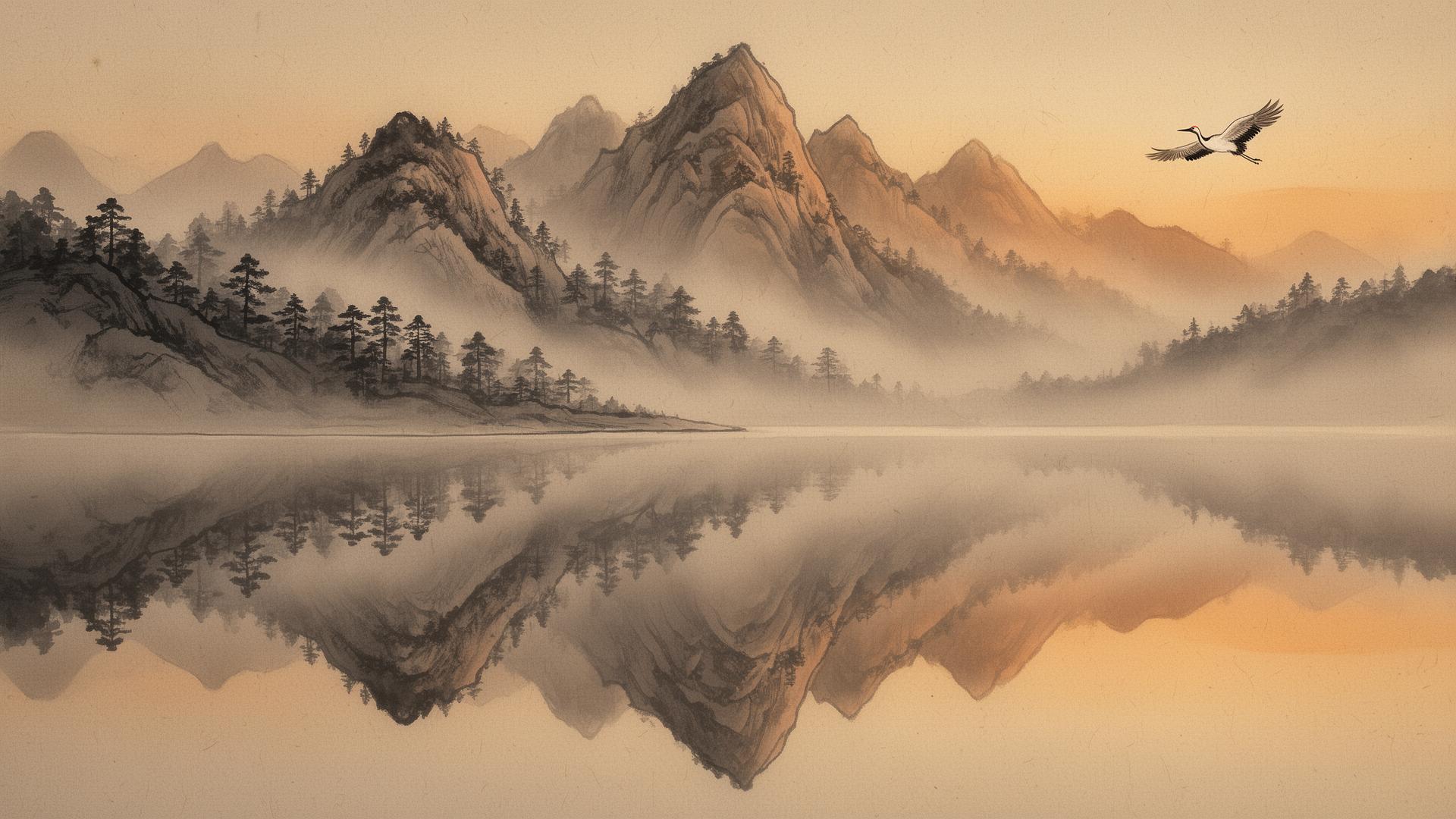
Chapter 8
Images in the Heart
You live within the pictures you keep returning to.
Images as Practice
Whatever you rehearse, you become fluent in. The Neiye 內業 notes that an unsettled heart attracts unsettled qi 氣. The images we keep returning to are the rooms in which the qi learns to live.
The great image has no form; the great sound is faintly heard.
Replacing, Not Repressing
Suppressed images grow stronger. The way is not to forbid them but to give the heart somewhere else to dwell. A clear image of what you wish to inhabit is more powerful than a long argument against what you do not.
Hold to the great image, and the world will come to you; come, and suffer no harm — find safety, peace, and ease.
The Quality of a Good Image
If the heart can be made tranquil, the sense organs will be acute; the four limbs will be firm; the body will be a fit dwelling for the essence 精 (jing).
Images and the Body
A clear, settled image relaxes the shoulders, deepens the breath, opens the gaze. The body reports the truth of an image faster than the mind admits it.
Letting Old Images Soften
An old painful image is loosened by being looked at calmly, named, and released — not by being argued with. The Zhuangzi 莊子: respond, but do not store.
Core Lesson
You live within the pictures you keep returning to. Choose well.
Practice for this lesson
Whatever image you keep returning to, you become fluent in. Most people rehearse the failure replayed, the slight remembered, the future feared — and wonder why the body feels braced. This practice is the opposite move: choose one good image, make it specific and sensory, and let the heart dwell there long enough for the body to learn its weather.
“Hold to the great image, and the world will come to you; come, and suffer no harm — find safety, peace, and ease. / The great image has no form.”
— Daodejing 道德經 §35 / §41
- 1Sit. Close the eyes. Take three settling breaths and let the shoulders drop.
- 2Ask: what image, when I touch it, quiets and gladdens the body? Not the most impressive one — the one that actually warms the chest. A kitchen, a shoreline, a person's face, a remembered hour of ease.
- 3Let the first image that arrives be enough. Do not audition others.
- 4Now make it specific. What is the light like — morning, dusk, lamp? What sound is in the room or the air? What temperature on the skin? What is underfoot? Sensory details are what let the body believe the image.
- 5Step inside it. Not as a memory you are recalling, but as a place you are presently in. Do not narrate it; inhabit it.
- 6Notice how the body responds — the breath dropping, the jaw loosening, the gaze softening behind closed eyes. The image is already retoning the qi.
- 7Stay one more breath without grasping. Then open the eyes slowly. The image has not been left behind; you are now carrying its weather into the room.
Reflection
- Which image arose first, and why might it have come now?
- Which sensory detail — light, sound, temperature, texture — warmed the body most?
- What changes if you visit this image briefly, three or four times today, instead of leaving it behind?
The images you return to are the rooms the qi learns to live in. Choosing one good room, and visiting it often, is a quiet form of care — more powerful than any long argument against the rooms you would rather not inhabit.